You might have heard about a new IRS ruling that makes it easier to contribute land to a corporation without immediately paying taxes. This is true: the IRS confirmed that land counts as “property” under a specific tax rule (Section 351). This means if you transfer land to a company you control, you can generally defer taxes – your original cost for the land simply transfers to your new shares in the company.
However, this new ruling does NOT mean you can simply drop your land into an Exchange Traded Fund (ETF) and avoid taxes.
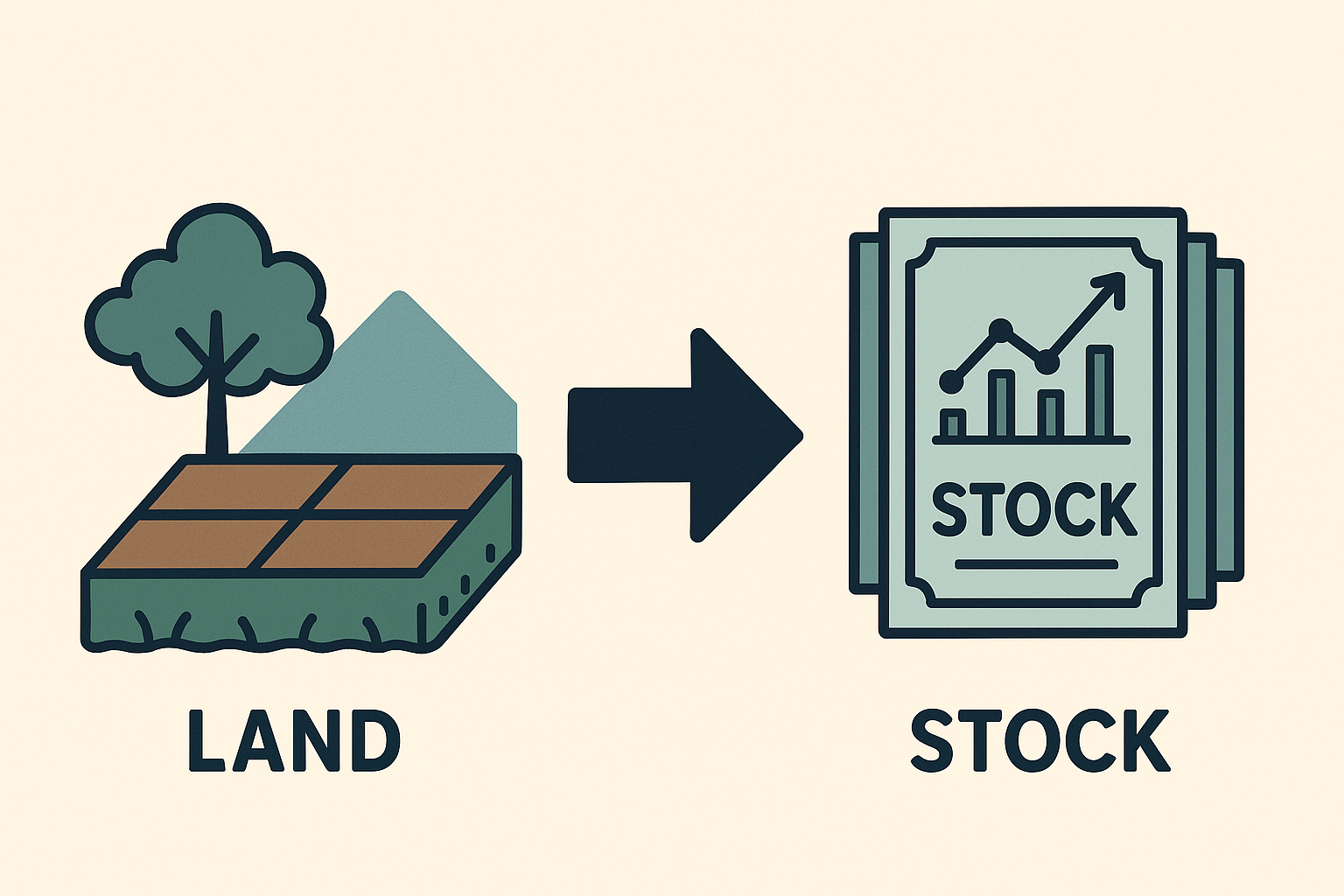
The ETF Problem: Investment Companies
While Section 351 encourages setting up new businesses, it has a big exception for “investment companies.” Most ETFs are set up as “Regulated Investment Companies” (RICs), which fall squarely into this category.
Here’s the catch: When you contribute land to an ETF, the IRS often views this as you creating a diversified portfolio for yourself. This act of diversification, when done with an investment company like an ETF, triggers immediate taxes under a rule called Section 351(e).
Why Your Land Isn’t “Diversified” Enough for an ETF
The IRS has specific rules for what counts as diversified. They use a “25/50 rule”:
- No more than 25% of the fund’s assets can be from a single source (issuer).
- No more than 50% of the fund’s assets can come from five or fewer sources.
Individual land parcels generally don’t count as diversified securities. So, even if you own multiple pieces of land, contributing them to an ETF would likely fail this diversification test, leading to taxable gains.
Beyond Taxes: The Practical Hurdles Of Section 351
Even if the tax rules allowed it, most ETFs aren’t designed to hold real estate. Think about it:
- Valuation: How do you regularly value land in an ETF?
- Custody: Who holds the title and manages the property?
- Liquidity: Land isn’t easily bought and sold like stocks.
These operational challenges, along with potential legal and tax complications, make it impractical for most ETFs to accept land.
A Better Option: Exchange Funds and Partnerships
If you’re looking to diversify your land holdings in a tax-deferred way, exchange funds are a more suitable option. These are typically structured as partnerships, not RICs like ETFs.
Under a different tax rule (Section 721), partnerships can hold up to 20% of their assets in illiquid assets like real estate and still qualify for tax deferral. This means:
- Your land can be pooled with other assets.
- Over time, you can receive a diversified mix of securities from the partnership.
- You could eventually move those diversified securities (but not the land itself) into an ETF.
The Takeaway
The recent IRS ruling is good news for certain corporate structures involving land. However, it’s not a loophole for putting land into ETFs tax-free. If you want to diversify your land holdings in a tax-efficient manner, you’ll likely need to explore more specialized st