

A Section 351 exchange is one of the most powerful tools in the modern ETF playbook. It allows investors and advisors to move appreciated portfolios into a new ETF wrapper without triggering an immediate tax bill. The underlying tax code is decades old, but its application to ETF launches is relatively new and growing fast.
This guide is the foundation of our Section 351 exchange resource library. We walk through the statutory rules, the diversification test, eligible and ineligible assets, account types, advisor duties, and the practical steps from screening to launch. Where the answer depends on facts and circumstances, we say so plainly and recommend you consult your tax advisor.
What is a section 351 exchange
A Section 351 exchange is a transfer of property to a corporation in exchange for stock in that corporation, where the transferor or group of transferors controls the corporation immediately after the exchange. The core rule comes from IRC Section 351(a). When the requirements are met, the transferor recognizes no gain or loss on the contributed property.
In the ETF world, the corporation is typically a newly launched fund. Investors contribute appreciated securities and receive shares of the new ETF in return. The basis of the contributed property generally carries over into the ETF shares received, so the gain is deferred rather than erased.
This structure is most often used during the seeding phase of a new fund. It is rarely a workable path for contributing into an existing ETF, because the control requirement is hard to satisfy in that situation.
The two foundational rules
Two requirements form the backbone of every qualifying exchange. Miss either one and the transaction generally becomes taxable.
The first is the property for stock rule. The transferor must contribute property and receive only stock of the corporation in return. Other forms of consideration can disqualify or partially taint the exchange. This rule is set out in IRC Section 351(a).
The second is the 80 percent control test. Immediately after the exchange, the transferor group must own at least 80 percent of the total combined voting power and at least 80 percent of the total number of shares of all other classes of stock. The control definition lives in IRC Section 368(c). This is the rule that effectively limits Section 351 strategies to new fund launches, where a coordinated group of seed investors can collectively meet the threshold.
A Section 351 exchange is not just an asset transfer. It must be a transfer of property to a corporation solely for stock, with the transferor group holding 80 percent control immediately after the exchange under IRC Section 351(a) and IRC Section 368(c).
The investment company diversification limit
A separate rule applies when the receiving corporation is an investment company, which includes a regulated investment company like an ETF. Under IRC Section 351(e) and Treasury Regulation Section 1.351-1(c), gain is generally recognized if the transfer results in diversification of the transferor’s interests.
In plain language, the contributed portfolio must already be diversified before the exchange. The market practice for measuring this is the 25 and 50 test. No single holding may represent more than 25 percent of the contributed portfolio value, and the top five holdings together may not exceed 50 percent.
Several mechanical rules sit underneath the headline numbers. Cash and cash items are excluded from the total assets denominator, so adding cash does not help a concentrated position pass. Government bonds are favorable diversifiers because they count in total assets but are not treated as a security of an issuer in the numerator. Different share classes of the same issuer must be combined, so a position split across voting and non voting shares is treated as one issuer.
When the contributed portfolio includes other ETFs, mutual funds, or closed end funds, the analysis looks through to the underlying holdings. This prevents wrapping a concentrated position in a fund and claiming diversification at the wrapper level.
What property can be contributed
Section 351 itself does not provide a menu of acceptable assets. Eligibility in the ETF context is driven by two questions. Does the asset satisfy the tax rule. Can the asset operate inside the ETF creation and redemption mechanism.
Generally workable assets include liquid US equities, ADRs, US and foreign stock ETFs, fixed income ETFs, and certain publicly traded closed end funds. Foreign equities and GDRs may be acceptable when the local market permits in kind transfers and redemptions.
Assets that sometimes work in small allocations include commodity ETFs, spot crypto exposure held through an ETF or trust product, and publicly traded partnerships. These cases require operational review and they need to fit the ETF strategy.
What property cannot be contributed
Several asset types are generally blocked. Mutual fund shares typically cannot be transferred because they are not redeemable in kind. Direct spot cryptocurrency cannot be contributed unless the receiving fund is structured to hold it. Restricted stock, RSUs, private securities, hedge fund interests, real estate investment trusts, options, and other illiquid alternatives are generally excluded.
Foreign securities can be blocked by local market rules. Several markets restrict in kind creations and redemptions, which makes their securities incompatible with the ETF basket process.
Portfolios with net unrealized losses deserve special attention. Section 351 generally carries over basis rather than stepping it up, so contributing a loss position can effectively waste the loss. Harvesting losses before any exchange is usually the better path. Consult your tax advisor before contributing positions with embedded losses.
Account types and ownership
Not every account type is a clean fit. Standard taxable brokerage accounts owned by individuals, joint owners, or revocable trusts are generally the most straightforward.
C corporations create complications. They can introduce a second layer of tax and may face built in gains issues if appreciated assets are later sold inside the structure. ERISA accounts, including most 401(k) plans and some pension structures, generally cannot transfer assets in kind without a specific Department of Labor exemption.
When clients hold appreciated assets across multiple accounts, the diversification analysis is typically performed at the taxpayer level rather than the account level. A client contributing from an individual account, a joint account, and a trust account may need an aggregated review.
Anything other than a clean taxable account warrants extra diligence and consult your tax advisor.
Operational requirements
Lot level basis records are mandatory. The custodian must produce purchase date and cost basis for every individual tax lot. Average cost data is not adequate. Because basis carries over into the new ETF shares, errors at the lot level create errors at the post launch tax level.
The contributed basket must align with the ETF prospectus. A US large cap fund cannot accept a portfolio dominated by emerging market debt. A focused sector fund cannot accept positions outside its sector mandate.
There must be no pre established plan to dispose of the contributed assets immediately after launch. Ordinary portfolio management is fine. A coordinated, pre arranged liquidation program can undermine the economic substance of the exchange.
Advisor and fiduciary duties
Financial advisors play a central role in most Section 351 ETF conversions. Clients rarely initiate these transactions on their own.
Written client consent is essential. Clients should receive plain language disclosures explaining that the transaction is designed to be tax deferred rather than tax free, that basis carries over, and that future sales of the ETF shares will trigger gain. Each client should be told to consult your tax advisor independently.
Affiliated transaction rules can apply. When an advisor or its clients may be affiliated persons of the new fund under Section 17 of the Investment Company Act of 1940, the transaction may need to comply with specific rules including Rule 17a-7. This is a fact specific compliance question that should be reviewed with counsel.
The duty does not stop at execution. Advisors should be prepared to explain the carryover basis, the post launch tax reporting, and the trade off between deferral now and recognition later.
How a section 351 exchange compares to other strategies
Section 351 is not the only path for moving appreciated assets. Direct conversion of a separately managed account into an ETF generally triggers gain on the appreciated positions, so the deferral benefit is lost. A Section 1031 exchange applies only to certain real property after the 2017 tax law changes, so it is not an option for securities portfolios.
Charitable strategies, exchange funds, and qualified opportunity zone investments each address specific situations and come with their own restrictions and timelines. Section 351 is generally the most direct way to defer gain on a broadly diversified securities portfolio while retaining the same economic exposure inside an ETF wrapper.
A simple framework for screening a fit
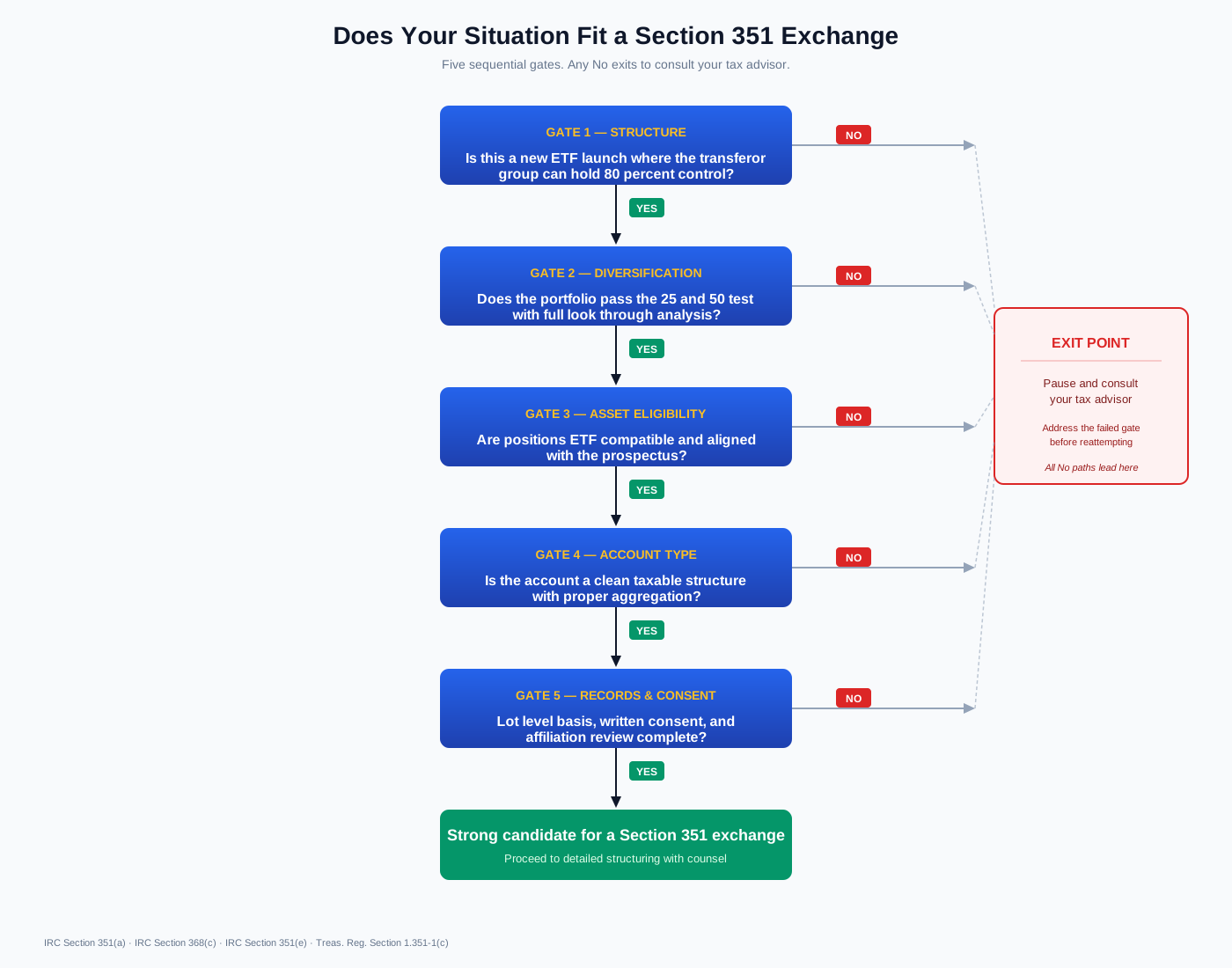
When an advisor or investor is evaluating a potential Section 351 exchange, the analysis typically moves through five gates.
Gate one is structure. Is the transaction a new ETF launch where the transferor group can satisfy the 80 percent control test under IRC Section 368(c).
Gate two is diversification. Does the contributed portfolio pass the 25 and 50 test under IRC Section 351(e) and Treasury Regulation Section 1.351-1(c), including look through analysis for any wrapped holdings.
Gate three is asset eligibility. Are the underlying positions compatible with in kind transfer and redemption, and do they fit the prospectus of the receiving fund.
Gate four is account type and ownership. Is the account a clean taxable structure, and have multi account taxpayers been aggregated for analysis.
Gate five is records and consent. Are lot level basis records confirmed, has written client consent been obtained, and have affiliated transaction questions been resolved.
If any gate fails, the answer is to pause and consult your tax advisor before going further.
What to expect during execution
A typical timeline runs several months. The fund sponsor builds the prospectus, registers the fund, and lines up service providers. Advisors run client screening in parallel and collect signed consents. Custodians prepare lot level data.
In the days before launch, contributed positions are confirmed against the basket the fund will accept. On the seeding date, the contributed assets transfer in kind into the ETF and the contributors receive ETF shares. After launch, normal portfolio management resumes inside the fund.
Tax reporting in the year of the exchange should reflect the non recognition treatment, with carryover basis recorded against the new ETF shares. Future sales of those shares trigger gain measured against the carryover basis.
Conclusion
A Section 351 exchange offers a rare combination of tax deferral and operational consolidation, but only when every gate is satisfied. The structure must be a new fund where the transferor group holds 80 percent control. The portfolio must be genuinely diversified under the 25 and 50 test. The assets must be ETF compatible. The accounts and ownership must be clean. And the records, consents, and compliance must all be in order.
When those conditions line up, the strategy can move significant appreciated wealth into a more efficient long term wrapper without writing a tax check today. When they do not line up, the right move is to slow down and consult your tax advisor.
The next step is to explore the deeper guides linked throughout this article, starting with the eligible assets list and the step by step process.